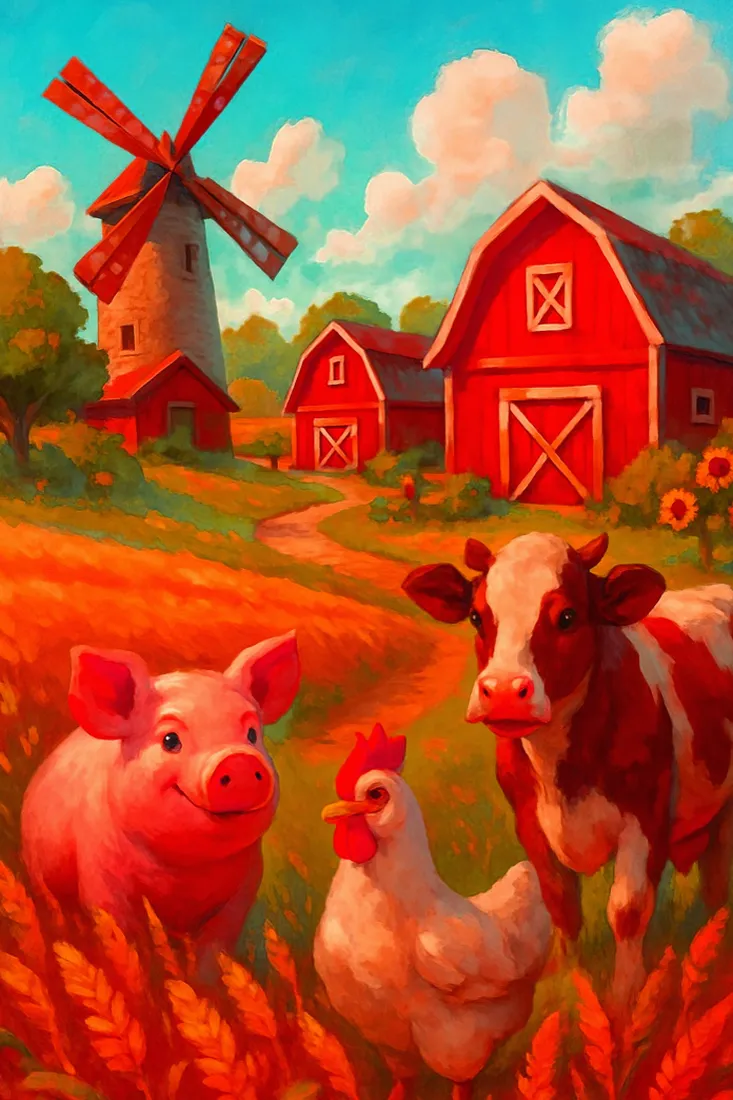
Farm games look alike in screenshots, but each rewards a different kind of player. Work out which kind you are, and the right game nearly picks itself.
Why two farm games can feel worlds apart
At a glance, every farming game shares the same furniture: fields, a barn, a few animals, a market and a timer ticking over everything. Yet two of them can feel completely different within half an hour. One is a quiet economic puzzle; another is a petting zoo; a third is really a story game in work clothes. The differences sit in what the game asks you to care about.
We find it helpful to sort them by their centre of gravity. Some revolve around crops and economy, where the satisfaction is a well-planned cycle. Some revolve around animals, where the joy is care and collection. Some revolve around place and story, where you farm to rebuild something. And some are about scale, where the reward is watching an estate grow. Knowing which centre you prefer saves a lot of disappointed afternoons.
None of these is better than the others. They suit different temperaments, and the same person might want a different one in different seasons. A planner in the depths of a long British winter might crave a story game for a change; an animal lover with a busy month might want something for short phone visits. Think about what you want now, not what you ought to enjoy.
For people who like counting harvests
If your favourite part of any game is working out the most efficient route, start with the economy farms. My Free Farm is the purest example on our shelf: 32 crops, fodder for your animals, processing into cheese and wool, and a player marketplace where prices reward reading demand. The look is plain, but the depth is real, and planning pays off visibly over weeks.
Big Farm offers a larger, busier version of the same pleasure, with more buildings, more products and production chains that stretch across several areas. It suits planners who like scale and do not mind a crowded screen. Molehill Empire 2 is a smaller, gentler option, where matching plantings to customer orders gives a compact puzzle that fits into short visits.
The question to ask yourself is whether you enjoy the waiting. Economy farms are built on timers, and the planning happens between visits. If you find yourself thinking about your next planting while making dinner, you are a natural fit. If the waiting feels empty rather than anticipatory, an animal or story game may give you more to do in each session.
For people who want animals to fuss over
Animal lovers have two very different choices here. Horse Farm puts one kind of animal at the centre and builds a whole world around it: breeds from Arabians to Shetland ponies, grooming and feeding, foals from breeding, and a guest ranch that funds better stables. It is focused and affectionate, ideal if horses are your passion rather than merely part of the scenery.
Farmerama goes the other way, filling the barnyard with as many species as possible. Chickens, rabbits, goats, sheep, cattle, pigs, turkeys, bees and horses all appear, plus rare animals that encourage collecting. It is bright and busy, with events constantly adding new faces. If you want variety and cheerfulness over depth, this is the game that delivers.
Both reward regular short visits more than long sessions, and both lean on decoration as part of the pleasure. Horse Farm is the calmer of the two, with a mobile app that suits daily grooming rounds. Farmerama is louder and more crowded, best on a desktop where you can take in the whole homestead and its stream of events.
For people who need a reason to keep going
Some players drift away from farm games because nothing seems to be at stake. For them, story is the answer. Sunrise Village frames everything as the restoration of a village under a mysterious fog, with a grandfather’s quests, villagers to help and six magical crystals to find. Every crop and workshop serves that aim, and the map expands as the mystery deepens.
The trade-off is control. Story-led farms set the pace through quests and, in Sunrise Village’s case, an energy system that limits how much you can explore in a session. If you like to set your own goals, that structure can feel confining. If you like being told what matters next, it is a relief rather than a restriction.
Gardeners who want character without a full plot should look at Molehill Empire 2. Its gnomes, with singing specialists and snail race jockeys, give the garden a personality that keeps logging in fun, and quests steadily unlock honey production and a herb garden. It sits between pure economy and pure story, a cheerful middle path.
Laptop, phone and the rhythm of your week
Finally, think about where and when you play. Three of our six games, Sunrise Village, Molehill Empire 2 and Horse Farm, have mobile apps alongside their browser versions, which makes short visits on the commute or over breakfast easy. The other three, My Free Farm, Big Farm and Farmerama, are desktop browser games best enjoyed with a proper screen.
If you mostly play on a phone in spare moments, choose from the first group. If you sit down at a desk in the evening with time to think, the second group rewards that attention. Plenty of our readers keep one of each: a pocket farm for daytime visits and a deeper desktop game for a quiet evening at home.
Whatever you choose, give it two weeks before judging. The first days of any farm game are designed to flatter, and the real rhythm only appears once timers lengthen. If the game still feels like a pleasant place to be after a fortnight, you have found your farm. If not, our finder will happily point you toward the next field over.