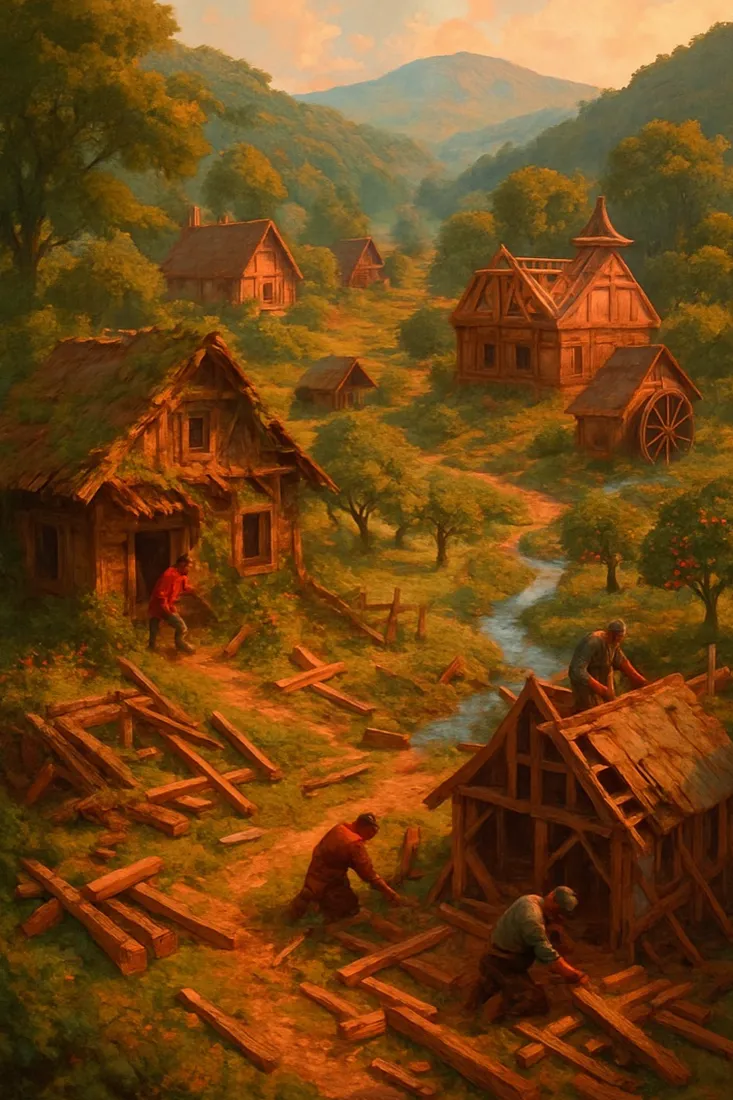
Big Farm is aptly named. Where some farm games are content with a few fields and a barn, this one keeps unrolling the map. You start with modest plots, a few pigs and cows, and a handful of buildings; within a fortnight you are juggling production lines, upgrade queues and a cooperative’s shared goals. The official page boasts more than 45 buildings and upgrade levels, more than 90 products and over 100 decorations, and you feel all of that scale as you play.
Goodgame Studios, the Hamburg company behind it, released Big Farm as a browser game in 2012, and it still carries the hallmarks of that era: busy screens, plenty of pop-ups, and a sense that something is always waiting for your attention. That can be exhausting or exhilarating depending on your mood. On our desk, the players who loved it most were the ones who like a farm that feels like a business with a staff of hundreds.
From a few plots to a working estate
The core loop is familiar: plant and harvest your fields, feed animals, turn their output into goods and sell those goods on the market. What sets Big Farm apart is how many of those loops run at once. Crops feed animals, animals feed processing buildings, and processing buildings feed orders, with realistic production cycles that reward planning a little ahead. Leave one link idle and you feel it further down the chain.
Expansion is constant. As you level up, new farms and areas unlock, including farms with a Caribbean flair on faraway islands, according to the publisher. Each new area adds space and production, which is thrilling the first few times and slightly overwhelming after that. If you prefer a farm you can take in at a glance, Big Farm will feel sprawling. If you enjoy steady, visible growth, it is hard to beat.
Co-ops, research and other farmers’ company
Cooperatives are where Big Farm becomes properly social. You join a co-op and play alongside your teammates, contributing to shared goals and a research system that improves your farms. A good co-op makes the mid-game far more pleasant, with advice, shared targets and the quiet motivation of not wanting to let your neighbours down.
The flip side is that some events ask you to compete against other farmers, and the busiest co-ops can feel like a second job. We found it best to choose a co-op whose pace matched our own. Ask before joining whether members are expected to hit targets; there is a friendly co-op for almost every temperament if you look for it.
A calendar that rarely goes quiet
Big Farm’s events run for anything from three days to a month, and there is nearly always one going. They bring fresh challenges, themed goods to produce and decorations to collect, and they are the main reason long-time players keep coming back. For a newcomer, though, the sheer volume can blur together. Our advice is simple: ignore events entirely for your first week and learn the farm first.
Once you are settled, events are a good way to give a session focus. Pick one, read what it asks for and plan your fields around it for a few days. Trying to complete every event at once is the surest route to burning out on a game that is otherwise happy to be played at a relaxed pace.
Desktop scale, desktop screen
This is a desktop browser game, and it needs the space. The estate view, production menus and co-op panels are dense, and a large monitor helps. Goodgame also makes Big Farm: Mobile Harvest, but that is a separate title with its own farm, not a companion to the browser game, so do not expect to carry your estate onto a phone.
On fairness, Big Farm sits in the middle of our shelf. Free players can build a large, attractive estate, but premium currency speeds up a great many timers and the shop is rarely far away. The game is happiest when you accept a slower pace and enjoy the growth for its own sake; chasing the top of every event leaderboard is where the pressure to pay grows sharpest.
Big Farm: the first week of chores
- Work through the tutorial quests in order; they unlock the buildings that form your first production chain.
- Keep fields planted with feed so pigs, cows and chickens produce without pause while you are away.
- Upgrade production buildings you use daily before buying decorations, however tempting the decorations are.
- Skip events this week and learn which goods sell well on the market instead.
- Browse cooperatives and join one whose members describe a relaxed pace that matches yours.
What we love
- Huge range of buildings, products and decorations keeps the estate growing for months.
- Cooperatives and the research system make mid-game play genuinely social.
- Events lasting days or weeks give long-time players fresh goals.
- Interlocking production chains reward a bit of forward planning.
What grates
- Busy screens and pop-ups can overwhelm newcomers in the first hours.
- Shop pressure rises sharply if you chase competitive event rankings.
- No way to carry the browser estate onto a phone.
The farmer Big Farm suits
Big Farm is for players who want scale: a farm that keeps getting bigger, a co-op to share it with, and a calendar of events to chase. It suits organised players with a decent screen and regular time. If you want a small, calm patch of land, this estate may feel like too much farm.
Big Farm, at harvest
Big Farm delivers the most land and the most to do of any game we reviewed. Its interlocking production, sizeable building list and genuinely useful cooperatives make it a rewarding long-term project, especially with a friendly co-op. The busy presentation and event-driven shop pressure keep it from the top, but for estate builders it is a generous, absorbing farm that rarely runs out of jobs.